The name
Perit
noun, Maltese. Pronounced peh-REET. From the Latin peritus, expert.
1. An architect-engineer: one professional responsible for both the design and the construction of a building.
2. By extension, a person with expert knowledge of materials, methods and land.
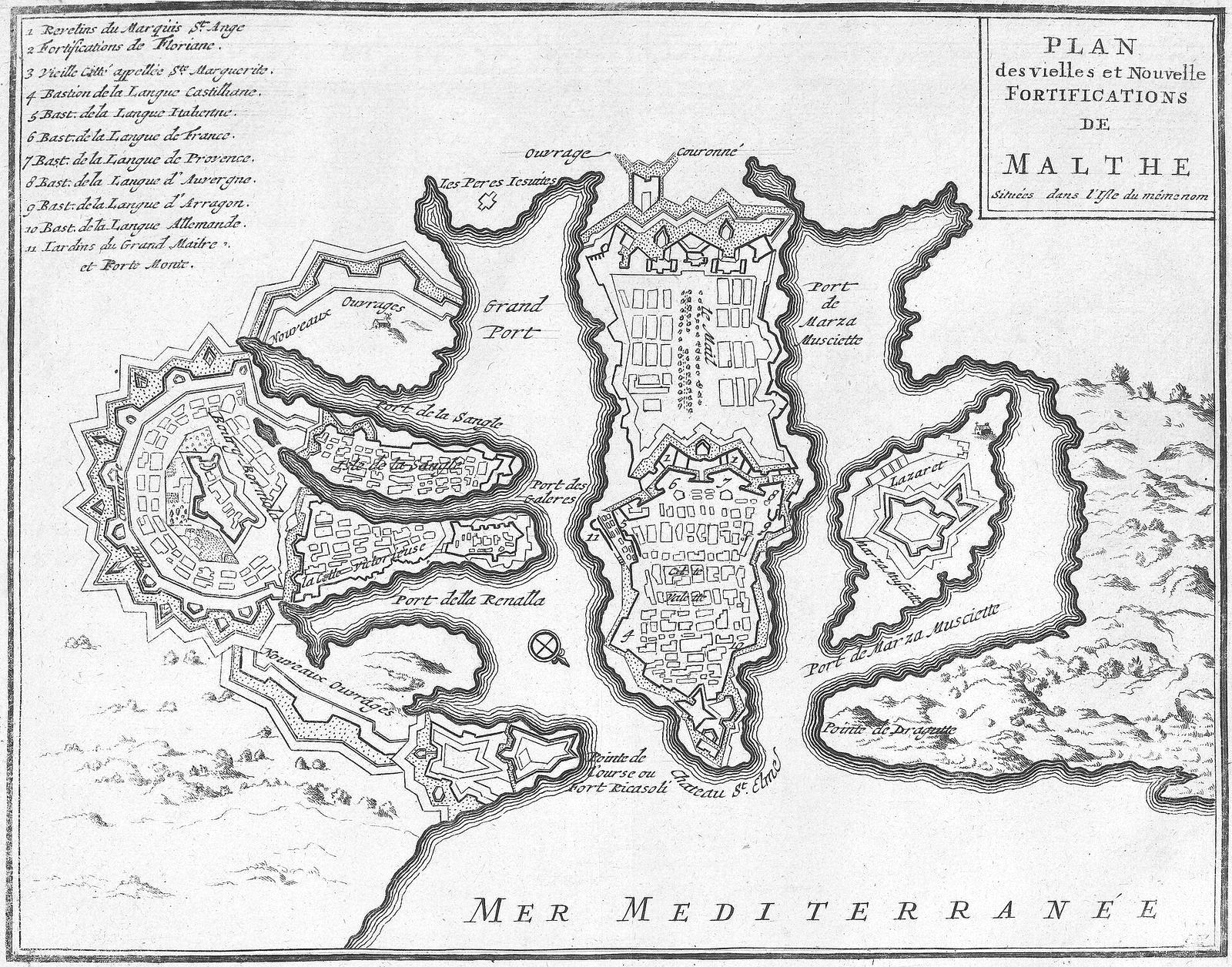
Plan des vieilles et nouvelles fortifications de Malthe, Nicolas de Fer, Paris, 1726
History
In Malta the architect and the engineer never separated. When the Order of St John settled on the island in 1530, a building boom followed, and the Maltese master masons who designed and supervised that work were already known as periti. The Knights brought their own military engineers for the fortifications, and the periti were valued beside them for their close knowledge of local stone and local methods. They were seated on the Order's planning board, and over the following centuries they drew the plans, valued the land, supervised the water supply and the roads, and signed the reports that went into contracts.
The island was small, practical and conservative in what it built, and it never had reason to split the drawing board from the site. The profession was formalised at the University in the nineteenth century, licensed by ordinance in 1919, and is still regulated today under the single generic title of Perit, covering architecture and civil and structural engineering together.
That is the tradition Periit takes its name from: one person who is responsible for how a building is designed and for how it is actually built.
Segmental arch, section